
Sandigan decision junking Marcos ill-gotten wealth case upheld
By Nidz Godino
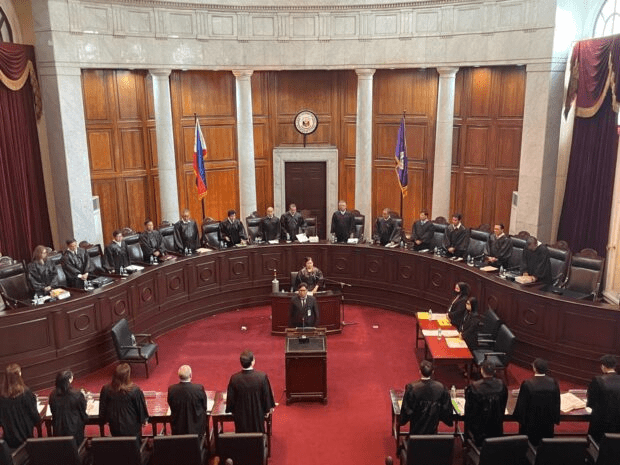
Supreme Court (SC) finally junked affirming Sandiganbayan 2012 ruling dismissing ill-gotten wealth case filed by Philippine government against estate of late president Ferdinand Marcos and several of his alleged cronies led by business tycoon Lucio Tan.
In 62-page decision promulgated on Oct. 3 but made public on Nov. 13, SC resolved consolidated cases originating from 1987 complaint for recovery and reconveyance of ill-gotten wealth filed by Presidential Commission on Good Government (PCGG) before Sandiganbayan.
High Court en banc upheld Sandiganbayan’s June 2012 decision and September 2012 resolution dismissed PCGG’s second amended complaint for reversion, reconveyance, restitution, accounting and damages.
Marcos Sr. estate was represented by former first lady Imelda Marcos, son and now President Ferdinand Marcos Jr. and daughters Senator Imee Marcos and Irene Araneta.
Aside from Tan, also named as respondents were Don Ferry, Cesar Zalamea and Tan’s family members and business associates.
In 2012, Sandiganbayan dismissed complaint, saying government failed to prove that assets and properties were ill-gotten wealth. Sandiganbayan also dismissed motion for reconsideration filed by government.
PCGG then brought case before SC in four separate petitions, which were all denied.
In denying petitions, High Court upheld Sandiganbayan’s findings pieces of evidence presented by PCGG failed to establish assets and properties covered in complaint were illegally acquired.
Among pieces of evidence presented by PCGG were former first lady’s amended answer, Tan’s written disclosure, Marcos Jr.’s testimony and documents found by commission during its investigations.
Identified in ill-gotten wealth case were Tan’s companies to which late president Marcos Mrs. Marcos allegedly gave concessions to, or have interests or beneficial ownership in.
In its decision, SC said Mrs. Marcos’ amended answer, she merely stated Marcos Sr. had 60 percent beneficial ownership in Tan’s companies, which beneficial interests were held in trust by business tycoon and his associates who were stockholders of said companies.
There is nothing in the amended answer “that would even suggest that undue advantage of office, authority, influence, connections or relationship was employed to facilitate acquisition by Marcos of his 60 percent beneficial ownership in respondent Tan’s companies,” High Court said.
Tan’s written disclosure, which was used by PCGG to prove 60-40 business arrangement between business tycoon and Marcos, including supposed incorporations of holding companies for latter’s benefit, meanwhile, cannot be admitted as evidence as prosecution failed to present him as witness to authenticate document.
SC said private document should be first authenticated either by person who executed it, person before whom its execution was acknowledged, any person who was present and saw it executed or who after its execution, saw it and recognized signatures or the person to whom parties to instruments had previously confessed execution before document can be admitted in evidence.
In the case of Tan’s written disclosure, business tycoon was not presented as witness and he was not cross-examined on statements he made in the document, saying “ hearsay rule excludes evidence that cannot be tested by cross-examination.”
SC also said Marcos Jr.’s testimony on purported meetings with his father and Tan on 60-40 business arrangement was “hearsay” and it cannot be used by prosecution to prove truth of facts asserted.
In its decision, the SC also affirmed 2010 Sandiganbayan ruling dismissed civil forfeiture case against Ferry and Zalamea, two alleged associates of Marcos Sr.
It also dismissed PCGG’s petition seeking reversal of Sandiganbayan’s resolution issued in 2011 denying its motion to admit third amended complaint seeks to include Philip Morris and Fortune Tobacco and several other individuals as respondents in the case.
High Court also affirmed Sandiganbayan’s 2011 decision to dismiss government’s motion for voluntary inhibition of chairman and members of Sandiganbayan’s 5th Division.






 ISKUP!