
20 Agosto 2024, Martes
Happy third birthday with father God Cynthia Lopez
Register now and vote in midterm polls
supports Agosto 2024, Buwan ng Wikang Pambansa
Aspirants file your certificate of candidacy on October 1-8,2024
Substitute candidates must be with same surname and political party
Partylist must file Certificate of Nomination and Acceptance
No to Divorce!!!
Get well soon Nanay Angelita Santiago-Lopez
No to SOGIE bill
PM for any hospital discharge problem

Calabarzon, MM classes suspended due to Taal vog
By Nidz Godino
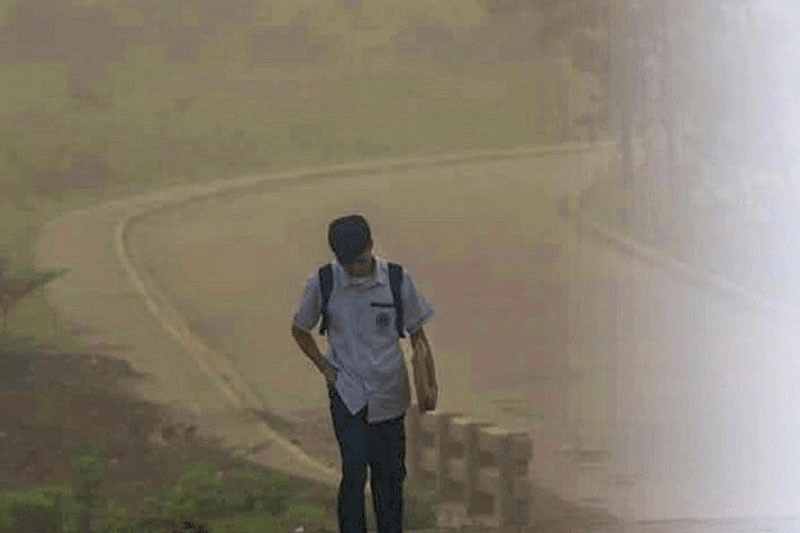
“Meanwhile, decision to lift suspension will depend on whether it is safe for learners and teachers to return…concerned personnel are advised to stay updated through news and announcements from Philippine Institute for Volcanology and Seismology,” Department of Education Secretary Sonny Angara said, referring to Phivolcs schools in over 40 areas in Calabarzon and Metro Manila suspended on-site classes due to volcanic smog or vog covered many areas in Batangas and Cavite as Taal Volcano emitted at least 3,335 tons of sulfur dioxide.
According to the Department of Education, classes were suspended in schools located in Balete, Balayan, Malvar, Laurel, San Jose, Mataas na kahoy, Agoncillo, San Nicolas, Nasugbu, Lemery, Lian, Talisay, San Luis, Alitagtag, Calaca City, San Pascual, Calatagan, Tuy, Cuenca, Sta. Teresita, Bauan, San Juan, Taal, Padre Garcia and Ibaan all in Batangas province.
In Cavite, face-to-face classes were also suspended in Silang, Mendez, Indang, Alfonso, GMA, Carmona, Gen. Emilio Aguinaldo, Amadeo, Maragondon, Naic and Carmona.
Schools in Calamba, Biñan and Los Baños in Laguna province as well as Metro Manila schools in Las Piñas and Muntinlupa also suspended classes.
Angara issued memorandum authorizing all affected schools in Calabarzon and Metro Manila to suspend classes if there are no announcements from local government units. He also ordered schools to implement modular or online learning.
He urged schools to report any displacements, injuries or other incidents involving students and teachers connected to volcanic smog.
Teresito Bacolcol, Philippine Institute of Volcanology and Seismology (Phivolcs) director, said smog was experienced in towns of Laurel, Tuy, San Luis, Balayan, Lemery, Talisay, Agoncillo, San Nicolas, Balete, Santa Teresita, Malvar and Alitagtag as well as in cities of Calaca, Batangas and Santo Tomas all in Batangas province.
Volcanic smog, he stressed, was also reported in Silang town and Tagaytay city in Cavite.
“Volcanic smog is mixture of water vapor, water particulate and sulfur dioxide…if hot volcanic material comes in contact with water, steaming or degassing occurs…this is emission of white smoke that we see at Taal Volcano,” Bacolcol explained.
Based on the latest bulletin from Phivolcs, there was upwelling of hot volcanic fluids in main crater lake of Taal, causing vog. Bulletin also said steaming reached 2,400 meters high, drifting in north-northwest direction.
“Lately steaming activity of Taal Volcano is high…we observed voluminous sulfur dioxide emission…together with emission of white smoke is voluminous sulfur dioxide,” Bacolcol said.
He stressed slow movement of wind at Taal caused steaming to stay in one place and form vog and “surrounding areas become hazy, especially in crowded communities.”
Volcanic smog is expected to dissipate once rains and strong winds occur.
“We are hoping it will rain so that it will dissipate fast,” Bacolcol said.
He recalled degassing activity of Taal Volcano started in 2020 “right after it erupted.”
“This is a natural occurrence since steaming is strong and, in some cases, causing vog…so, basically it will take years before emission of sulfur dioxide stops, we have been implementing Alert Level 1 since July 2022…we don’t see any reason to increase alert level because aside from voluminous sulfur dioxide emission, other parameters are almost normal,” Bacolcol explained as he noted Alert Level 1 remains in effect at Taal Volcano.
Citing data, Bacolcol said no volcanic earthquake was recorded at Taal for the past 11 days, although at least 31 phreatic eruptions were recorded since April.
He advised affected residents to wear N95 masks to protect themselves and to drink lot of water once they inhale sulfur dioxide.
“If we cannot prevent going in affected areas, they should protect themselves and wear masks, preferably N95,” he said.
Residents in Quezon City, especially those with respiratory ailments, have been advised to stay home as some areas were monitored to have “unhealthy” or “very unhealthy” air quality, city government said.
City’s air quality monitoring showed at least two areas Cubao Arayat and Commonwealth Ave. near St. Peter Church to have “very unhealthy” air quality between Aug. 18 and 19.
Nine other areas have “unhealthy” air quality Susano Road, Payatas Controlled Disposal Facility, Commonwealth Ave. (near Pearl Drive), Jose Rizal High School, Batasan Hills Barangay Hall, Tandang Sora Barangay Hall, Tomas Morato Ave., EDSA-Timog Ave. and Libis Barangay Hall.
City government previously installed air quality monitors across the city to regularly monitor air quality. It issues regular advisories and recommendations based on monitoring.
“QCitizens, especially those with respiratory illnesses like asthma, please avoid going out of your homes…if this is not possible and you need to go out, please wear mask,” city government said.

 ISKUP!