
10 Hulio 2024, Miyerkules
Register now and vote in midterm polls
Aspirants file your certificate of candidacy on October 1-8,2024
Substitute candidates must be with same surname and political party
Partylist must file Certificate of Nomination and Acceptance
No to Divorce!!!
Get well soon Nanay Angelita Santiago-Lopez
No to SOGIE bill
Best wishes Mr. and Mrs. Seth Elyon San Pedro
happy 10th Anniversary Binang City, Laguna Chapter Servants of God in Christ Jesus Christian Ministries Inc., Dr. Enrico San Pedro, Pastor
PM for any hospital discharge problem

No military facilities under Ph-Jpn pact
By Nidz Godino
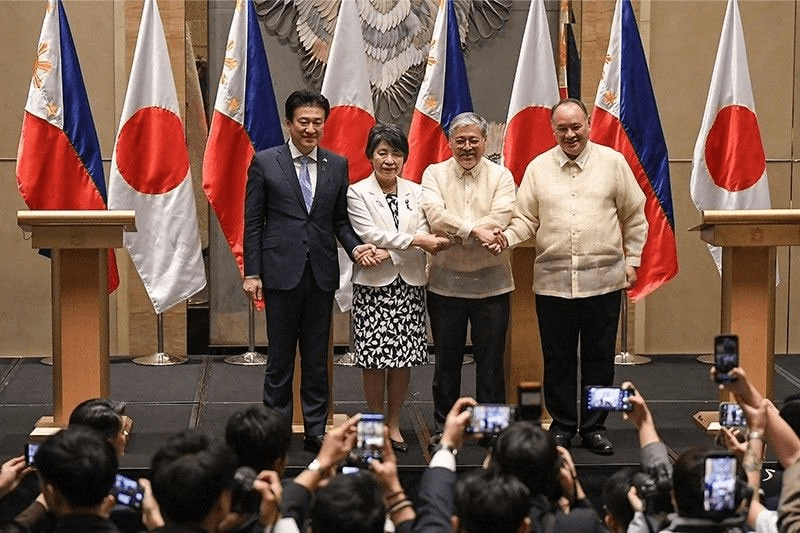
“Nothing in this agreement shall be construed as providing basis for Party to establish its military facilities in territory of other Party,” Japanese foreign ministry deputy press secretary Mariko Kaneko said at briefing after signing of agreement at Malacañang nothing in the Philippines-Japan Reciprocal Access Agreement (RAA) sets legal foundation for establishment of military facilities in both countries.
Signing followed second Japan-Philippines Foreign and Defense Ministers Meeting (“2+2”).
“So no misunderstanding on both sides, not to have military base in another country…it does not provide legal foundation for establishment of military facilities,” Kaneko said.
Signing of RAA came shortly after Japan’s Foreign Minister Yoko Kamikawa and Defense Minister Minoru Kihara met with President Ferdinand Marcos Jr.at Malacañang.
RAA, allows Japanese and Filipino forces to enter each other’s country for joint military exercises, was signed by Defense Secretary Gilbert Teodoro Jr. and Kamikawa in ceremonies witnessed by Marcos, Foreign Affairs Secretary Enrique Manalo and Kihara.
Defense agreement will take effect after ratification by the two countries’ legislatures.
Kaneko said Japan is “much concerned” about China’s dangerous actions in East and South China Seas, including June 17 violent disruption by Chinese coast guard of resupply mission to BRP Sierra Madre in Ayungin Shoal.
“Japan supports position that China should uphold international order and raise this issue to Chinese government…we have been doing so and raise voice in international community so China will not be able to do such act, unilateral act, use of force to change status quo,” she stated.
Kaneko stressed Japan is fully supportive of Philippines’ firm stand against unilateral action by China or any other country to change status quo in the region.
She underscored unwavering commitment of Philippines and Japan to freedom of navigation and overflight.
Earlier, Manalo, Teodoro, Kamikawa and Kihara met in Manila for discussions on current bilateral security environment and on regional issues, including situation in Taiwan and Korean Peninsula.
They emphasized need for international community to speak out on importance of maintaining and strengthening free and open international order based on rule of law.
While it may have already gained early support from some senators, RAA will still be subject to close scrutiny by Senate before it gets ratified, Senate President Francis Escudero said.
“We will scrutinize it like other treaties Senate is asked to ratify by the Executive,” Escudero said.
He said agreement has yet to be submitted to Senate for ratification. “I personally welcome this agreement because it will strengthen and firm up our position on issue with China on West Philippine Sea. But there is no substitute for beefing up our armed forces on our own. And while we’re not yet there, it is good that we have arrangements like this to strenghten our position and situation,” he said.
Sen. Nancy Binay would vote for ratification of RAA, as she called deal representation of country’s commitment to peace and security in the region.
“Since 2022, former Senate president Migz Zubiri and then-ambassador to the Philippines Koshikawa Kazuhiko consistently pushed for crafting of RAA between Philippines and Japan, signing of RAA is fruit of Senate’s effort for peaceful resolutions to maritime conflicts in Asia-Pacific Region, assertion to our territorial rights and reiteration of Philippines’ adherence to defend its national sovereignty, RAA’s value to National Security underscores how increased maritime security cooperation safeguards Philippine economic interests,” she said.
Sen. Bong Go said signing of RAA is in best interest of Filipinos.
“Interest of people, interest of Filipinos, if it is good for the people, we will support it,” Go said.
For Speaker Martin Romualdez, RAA is “proactive approach in addressing security challenges and promotes rules-based international order.”
He said agreement sets “foundation for expanded defense collaboration that is poised to contribute significantly to regional peace and stability.”
“Signing of RAA signifies crucial moment in Philippine-Japan relations, heralding new era of strengthened defense cooperation amid evolving regional geopolitical challenges,” Romualdez said in statement.
Landmark agreement, he maintained, allows expanded participation of Japanese forces in joint military exercises such as Balikatan drills with Philippines and US, “marking significant step forward in regional security efforts.”
He stressed RAA is important in enhancing defense capabilities and fostering deeper strategic ties between Manila and Tokyo.
“RAA highlights our shared commitment to regional stability and security, strengthening our defense capabilities and reaffirming Philippines’ strategic partnership with Japan,” he maintained.
He said agreement reflects two countries’ “shared values of peace, stability and prosperity in the region.”

 ISKUP!