
30 Mayo 2024, Huwebes
Happy 48th Anniversary Mariveles Baptist Church, Mariveles, Bataan
City of Makati, France in June
supports World Press Freedom Day, May 3
Register now and vote in midterm polls
supports International Nurses’ Day
Aspirants file your certificate of candidacy on October 1-8,2024
Substitute candidates must be with same surname and political party
Partylist must file Certificate of Nomination and Acceptance
supports May, Cardiac Illness Prevention Month
No to Divorce!!!
Get well soon Nanay Angelita Santiago-Lopez
PM for any hospital discharge problem

Lower tariffs to slash rice prices by P5
By Nidz Godino
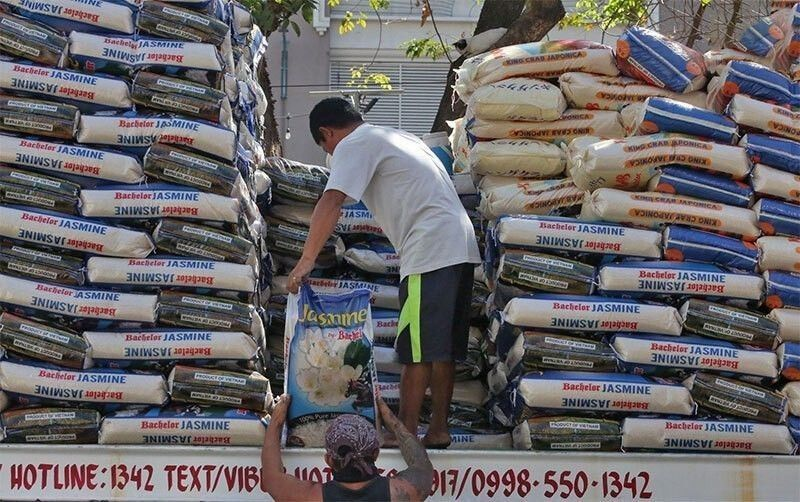
“If we are going to lower tariffs to 17.5 percent, there would be huge reduction in retail prices of rice…our estimate is about P4 to P5 per kilo reduction,” Agriculture Assistant Secretary and spokesman Arnel de Mesa said at forum rice prices could go down by as much as P5 per kilo if tariffs on rice imports would be further reduced.
Reducing rice tariffs below 35 percent would result in retail prices of staple decreasing by P4 to P5 per kilo, De Mesa said.
Finance Undersecretary Domini Velasquez said government is looking at further reducing rice tariffs to around 15 to 20 percent compared to already lowered present rate of 35 percent.
De Mesa was referring to tariff rate earlier floated by Finance Secretary Ralph Recto. Earlier this week, Recto disclosed government wants to cut rice tariffs further to pull down retail prices of staple faster.
Government already extended lower tariff rates of 35 percent on rice imports until end of the year as part of its counter-inflation measures.
Department of Finance is willing to forego estimated revenue losses of “less than P10 billion” arising from rice tariff reduction in exchange for slowing down country’s inflation, Velasquez pointed out.
“Foregone revenues would not matter much if we are able to bring down prices of rice by P4 to P5,” she said.
De Mesa, meanwhile, said prevailing farmgate prices of palay would not be impacted much by tariff reduction because of higher buying price being offered by National Food Authority (NFA).
Rice imports account for about 20 percent of country’s total staple supply.
Rice inflation softened to 23.9 percent inflation in April from 24.4 percent in March, based on PSA data.
Raul Montemayor of the Federation of Free Farmers said reducing rice tariffs further could be “ill timed” since rice competitiveness enhancement fund (RCEF), depends on tariff collections, is being amended and improved.
Lawmakers and officials are keen on raising guaranteed earmark budget of RCEF to P15 billion from present P10 billion since annual tariff collections have been more than P20 billion in recent years.
All rice tariffs collected are used by government to bankroll various programs aimed at making local rice farmers more competitive since RTL law was passed in 2019.
“Let private sector service non-poor consumers at market prices…no need to touch tariffs…if we reduce tariffs, we lose revenues and funds for farmers, depress palay prices with no guarantee that retail prices will go down,” he said.
Palay procurement has tripled, totaling to 2.8 million bags equivalent 126,000 metric tons of rice, but still short of NFA target of nine-day consumption of 300,000 MT, NFA Administrator Larry Lacson said.
NFA has started buying palay for as high as P30 per kilo in latter part of April 2024 after NFA council has approved higher procurement in bid to boost government’s rice buffer stock.
Dry and clean palay ranged between P23 and P30 per kilo, depending on prevailing market price in given province.
Previously, NFA bought dry and clean palay for P19 to P23 per kilo.
For wet and fresh palay, NFA’s buying price ranged from P17 to P23 per kilo from previous P16 to P19 price level.
Meanwhile, Lacson said NFA is ready to supply rice to concerned government agencies and local government units amid threat of La Niña in the country.
According to Lacson, bulk of rice stocks is in hands of private sector and household.
Sen. Cynthia Villar said Senate will pass amendments to Rice Tariffication Law (RTL) or Republic Act 11203 in August after House of Representatives approved similar measure on third and final reading.
Villar, chairs Senate committee on agriculture and food, maintained she is against version of lower chamber aims to bring back power of NFA to import as well as sell staple in the market.
“Department of Agriculture will be given power to import rice… they can import free of tariff which can be used to help poor and victims of calamities,” Villar said.
Rep. Mark Enverga, chairman of House committee on agriculture and food security, earlier assured senators and public that they definitely have “safeguards” in restoring power of NFA in helping stabilize price of rice.
Meanwhile, Villar said proceeds from RTL will be based on percentage collection instead of present fixed amount.
She said under amendments of RTL, allocation from tariff collections to farmers will be based on percentage of collection.
According to Villar, aside from budget allocation for mechanization, inbred seed production, loan for farmers and training, funding for water impounding facilities with solar power, composting machine and emergency fund for rice importation will be added.
Agricultural Sector Alliance of the Philippines lauded passage of Anti-Agricultural Economic Sabotage Act imposing severe penalties, including life imprisonment on smugglers, hoarders, profiteers and cartels of agricultural and fishery products.
AGAP party-list Rep. Nicanor Briones said measure aims to protect farmers’ livelihood as well as state from manipulative scheme of economic saboteurs.
Measure imposes penalty of life imprisonment, three times recommended fine and will be non-bailable.
Private citizen can also file case.
Under bill, tipster or whistle blower will receive at least P1 million to P20 million or 20 percent as reward.
Briones said measure protects agricultural producers and welfare of consumers and economy as whole and plugs leakages in tax and duty collection.
He said President Ferdinand Marcos Jr.’s order to pursue and hold accountable those involved in smuggling of agricultural products in the country is meaningless if Bureau of Customs is still in council of new law and no case has been filed against smugglers and economic saboteurs.

 ISKUP!