
13 Mayo 2024, Lunes
Happy 48th Anniversary Mariveles Baptist Church, Mariveles, Bataan
Register now and vote in midterm polls
supports International Nurses’ Day

SCS has most excessive maritime claims challenged by US
By Nidz Godino
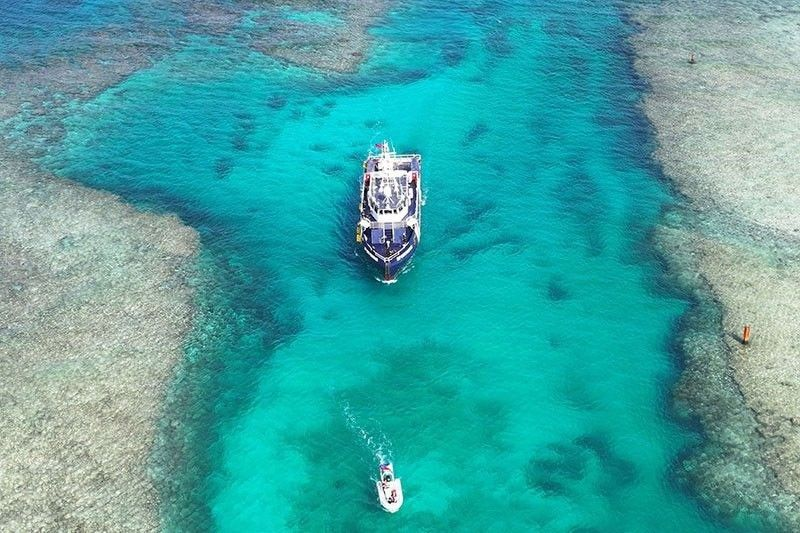
“If left unchallenged, excessive maritime claims could permanently infringe upon freedom of seas enjoyed by all nations,” US Department of Defense FON report said excessive maritime claims advanced by China and two other claimants in South China Sea (SCS) were most operationally challenged by United States forces under Freedom of Navigation program.
Defense department released annual FON Report for fiscal year 2023. During period from Oct. 1, 2022 through Sept. 30, 2023, US forces operationally challenged 29 different excessive maritime claims advanced by 17 different claimants throughout the world.
Excessive maritime claims are unlawful attempts by coastal states to restrict rights and freedoms of navigation and overflight and other lawful uses of sea.
These are inconsistent with international law as reflected in 1982 United Nations Convention on Law of the Sea (UNCLOS). They include variety of restrictions on exercise of navigation and overflight rights and other freedoms and lawful uses of seas.
Annual Freedom of Navigation Report 2023 identified excessive maritime claims in South China Sea by China, Vietnam and Taiwan that were challenged by US FON Program.
Challenged were China’s straight baselines not drawn in conformance with international law or Chinese government’s Declaration on Baselines of Territorial Sea; requiring prior approval for military survey activities in exclusive economic zone; restrictions on foreign aircraft flying through Air Defense Identification Zone without intent to enter national airspace; requiring prior permission for innocent passage of foreign military ships through territorial sea; and Beijing’s claims of “historic rights” in South China Sea.
Also challenged were Taiwan requiring prior notice for foreign military vessels to conduct innocent passage in territorial sea and Vietnam’s straight baselines that do not conform with UNCLOS and imposing prior notification for foreign warships to enter territorial sea.
US rejected unlawful and sweeping maritime claims in South China Sea that pose serious threat to freedom of seas, including freedoms of navigation and overflight, free trade and unimpeded commerce, and freedom of economic opportunity for South China Sea littoral nations.
Playvolume00:00/01:12TruvidfullScreen
According to US Navy, China, Vietnam and Taiwan “purport to require either permission or advance notification before foreign military vessel engages in ‘innocent passage’ through territorial sea.”
US forces also challenged excessive maritime claims by Cambodia in Gulf of Thailand; Colombia (Caribbean Sea), Croatia (Adriatic Sea); Dominican Republic; Iran (Strait of Hormuz, Persian Gulf and Gulf of Oman); Japan (vicinity of Tsushima Strait and Senkaku Islands); Latvia (Baltic Sea); Maldives; Malta (Mediterranean Sea); Oman (Strait of Hormuz); Russia (Bering Strait); Thailand (Andaman Sea); United Arab Emirates (Persian Gulf and Gulf of Oman), and Yemen (Bab el-Mandep Strait).
“Unlawful and sweeping excessive maritime claims or incoherent legal theories or maritime entitlement pose threat to legal foundation of rules-based international order,” according to report.
Defense department said US is committed to confronting this threat by challenging excessive maritime claims.
“As long as some countries continue to assert limits on maritime rights and freedoms exceed coastal state authorities nested under customary international law, United States will continue to challenge such unlawful claim,” it said.
Philippines is the only country can create artificial island on Escoda Shoal, island within country’s exclusive economic zone (EEZ), according to former Supreme Court associate justice Antonio Carpio.
“Escoda Shoal is part of 200 nautical mile EEZ of Philippines…as such, only Philippines can create artificial island on Escoda Shoal, any structure or artificial island erected by China on Escoda Shoal is illegal under international law,” Carpio told media in text message.
In such instances China constructs artificial island or any structure in Escoda Shoal, Carpio said Philippines can seek legal options, such as filing case for damage to marine environment for destruction of coral reef.
“Case will be filed with UNCLOS tribunal,” he added.
Carpio also pointed out purpose of China in creating artificial island is to create military outpost that would “prevent Philippines from getting gas in Reed Bank and in other nearby areas.”

 ISKUP!