
Hse committee of the whole inked RBH7
By Nidz Godino
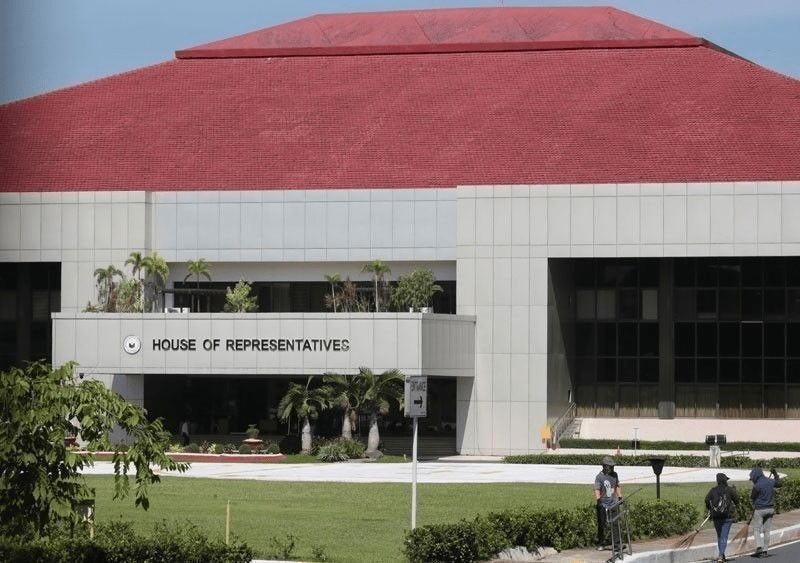
“If we remain closed to foreign investors, then we will surely be losers… Filipino will suffer,” former Sen. Gregorio Honasan said House of Representatives acting as committee of the whole approved overwhelmingly Resolution of Both Houses No. 7, containing three proposed amendments to perceived restrictive economic provisions in 1987 Constitution.
Committee voted to endorse amendment proposals in RBH7, particularly amending provisions in the Constitution such as grant of legislative franchises and ownership of public utilities in Article 12, ownership of basic educational facilities in Article 14 and ownership of advertising firms in Article 16.
Deputy Majority Leader Neptali Gonzales II told reporters at briefing that “plenary deliberations” will start on March 11 when committee report will be reported out to House members, and RBH7 may be approved on second reading by March 13.
In six days of hearings, lawmakers heard testimonies of resource persons including former Cabinet members, former lawmakers, academics, Filipino educators and professionals based abroad, former Supreme Court justices, economists and framers of Constitution.
Gonzales, who was designated majority leader of the committee, moved to terminate hearings.
Lawmaker from Mandaluyong City then presented motion to approve RBH7, embodies proposed amendments.
Shortly after, Majority Leader and Zamboanga City Rep. Manuel Jose Dalipe, who was presiding over the hearing, declared resolution approved.
Dalipe, Senior Deputy Speaker Aurelio Gonzales Jr. of Pampanga and Deputy Speaker David Suarez of Quezon, all principal authors of RBH 7, alternately presided over six days of marathon hearings that started last Feb. 26.
House timeline set by Speaker Martin Romualdez vowed to finish economic amendments before Congress goes on Holy Week break on March 23.
Resource persons that were invited were Honasan, former finance secretary Margarito Teves, Department of Foreign Affairs Undersecretary Jesus Domingo and Finance Undersecretary Rosemarie Edillon.
Honasan said lifting foreign ownership restrictions in the Constitution could contribute immensely to country’s economic growth and that Charter should be made to adapt to fast-changing global geopolitical, economic and technological conditions and developments.
At the same time, he said proposed economic amendments, “together with policy reforms, will propel Philippines to be on par with its neighbors in attracting foreign investments.”
Teves said foreign equity limitations in Charter “are binding constraints to investors” that are not present in basic laws of other ASEAN countries like Singapore and Malaysia.
He said Philippines has to adjust its “legal framework” to make it comparable with ASEAN neighbors and be competitive in enticing foreign investors.
Teves also advocated opening land ownership in rural areas to foreigners, subject to “data-driven” parameters Congress may prescribe.
He said establishment of foreign-owned manufacturing plants in rural communities would provide job and livelihood opportunities to people in those areas and lead to economic development of regions.
Rural residents seeking jobs would no longer have to migrate to Metro Manila and other urban areas, he said.
Meanwhile, passage of RBH7 was opposed by five lawmakers who deemed it unnecessary and not beneficial to Filipino people.
Opposing lawmakers were Camarines Sur Rep. Gabriel Bordado Jr., Albay Rep. Edcel Lagman and party-list representatives Raoul Manuel of Kabataan, France Castro of ACT Teachers and Arlene Brosas of Gabriela.
In explaining his vote, Bordado said advocates of Charter change have been attributing country’s “bleak economic situation to supposedly antiquated and restrictive provisions of the Constitution” on foreign ownership.
“While our current grim economic condition calls for urgent responses, is Charter change most immediate course of action we should pursue?” he asked.
Bordado noted RBH7 introduces phrase “unless otherwise stated by law” into some economic provisions as “ solution to ease restrictions set by Charter.”
However, he underscored “this fails to address myriad other issues adversely affect our economy and hinder our nation’s growth and advancement.”
He also pointed out that making the country “more attractive to foreign investors… without first addressing internal problems plaguing our systems renders all our efforts futile.”
For Brosas, constitutional amendment is contradictory to sense of Constitutional Commission when it prohibited Congress from passing any law that will expand foreign equity shares in educational institutions in 1987 Charter.
Brosas said this emphasizes that Filipino participation in education “can never be reduced to foreign equity.”
“This is clear indication that ConCom does not wish for Congress to meddle with educational ownership provisions of the Constitution,” she added.
All may be well between Senate and House of Representatives, but passage of Resolution of Both Houses No. 6 in upper chamber remains “big challenge,” Senate President Juan Miguel Zubiri said.
“We are back to what it was pre-PI ,people’s initiative,” Zubiri told Senate reporters.
He, however, admitted that passage of RBH6 seeking to amend specific economic provisions of Constitution remains challenge.
“I think fight between our friends in the House here in Senate is factor, there is trust issue… I mentioned that to the President…we could still get 18 votes for RBH6 to pass in the Senate but at this point in time, it’s challenge, but commitment is discuss and debate upon resolution… we are complying with our commitment to debate and discuss with stakeholders…we have to make our case to our colleagues,” he noted.
Zubiri emphasized importance of establishing rules in discussing the matter with Sen. Francis Tolentino, in filing Senate Resolution 941 seeks to amend Senate rules to allow amendment of the 1987 Constitution through “fourth mode,” formula devised by the late Joaquin Bernas, one of the framers of Charter.
Under the Constitution, amendments to Charter can be introduced through constitutional convention, constituent assembly or people’s initiative.
“Bernas explained… two houses of Congress are not required, as they were under 1935 Constitution, to be in joint session…hence, it is quite possible for the two houses to formulate amendments the way they formulate laws as they are where they are,” the resolution stated. “Once one house is through with draft, it is passed on to the other house for action.”
“If there is a prohibition, it can come either from letter of the Constitution and there is none or from fundamental structure of our constitutional government. Thus, for instance, implicit prohibition of joint voting comes from bicameral structure of Congress,” SR 941 added.
“Education Cha-cha” or proposal to amend education sector in the Constitution would help lead country from labor-base phase to innovation phase, according to Sen. Sherwin Gatchalian.
During Kapihan sa Manila Bay forum, Gatchalian, chairman of Senate committee on basic education, said country can open education sector and benefits can be felt in five to 10 years.
“So if we listen carefully to the stakeholders, especially those who are advocating educational Cha-cha, we are looking at increasing research and development, producing more students or more graduates, with this workforce, we can level up our economy from labor-intensive economy to knowledge-based and innovation phase front…we need to create building blocks and one of the building blocks is knowledge training,” Gatchalian said.
Gatchalian noted that many stakeholders who are not in favor of education Cha-cha feared basic education in hands of foreign institutions would impart different kind of value, patriotism and nationalism from Filipino brand.

 ISKUP!